New to Telerik Test Studio? Start a free 30-day trial
Log Error Dialogs
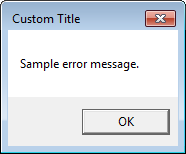
My application can potentially display a dialog containing an error message during test execution. The dialog can appear multiple times and will not always appear at the same point in the test, therefore I cannot use a standard Dialog Handler step.
I want to capture these error messages and automatically handle these dialogs if they appear.*
Solution
This is possible with a coded solution. The stipulation is that the dialog is displayed the same way and has the same title in each browser:
- Add an Assembly Reference to System.Windows.Forms.
- Add a coded step to the beginning of the test that creates a dialog monitor.
- Define a custom dialog handler that is referenced in the coded step.
- Override the OnAfterTestCompleted method to log whatever text the dialog handler captured.
- Auto reset the dialog handler in case of multiple dialogs.
Here is the full code-behind file, excluding the standard using/Imports statements and the Dynamic Pages Reference region:
C#
using System.Threading;
using System.Windows.Forms;
using ArtOfTest.WebAii.Win32.Dialogs;

namespace TestProject7
{
    public class HandleDialogLogText : BaseWebAiiTest
    {
        string txt = string.Empty;
        GenericDialog errorDialog;

        public override void OnAfterTestCompleted(TestResult result)
        {
            Log.WriteLine("OnAfterTestCompleted dialog text: " + txt);
            base.OnAfterTestCompleted(result);
        }

        [CodedStep(@"New Coded Step")]
        public void HandleDialogLogText_CodedStep()
        {
            errorDialog = new GenericDialog(ActiveBrowser, "Custom Title", true);
            errorDialog.HandlerDelegate = HandleErrorDialog;
            Manager.DialogMonitor.AddDialog(errorDialog);
        }

        public void HandleErrorDialog(IDialog dialog)
        {
            txt += "\r\n";
            txt += "Dialog " + (dialog.HandleCount + 1).ToString() + ": " + dialog.Window.AllChildren[dialog.Window.AllChildren.Count - 1].Caption;
            Manager.Desktop.KeyBoard.KeyPress(Keys.Enter);
            dialog.HandleCount++;
            Thread resetDialog = new Thread(new ThreadStart(ResetDialog));
            resetDialog.Start();
        }

        public void ResetDialog()
        {
            Thread.Sleep(500);
            errorDialog.CurrentState = DialogCurrentState.NotActive;
        }
    }
}