Check Out These Amazing Projects from the Progress x GitNation Hackathon!

Summarize with AI:
Our Progress x GitNation hackathon at React Summit and JSNation netted 30+ projects that blew us away. Check out our winners and some of our favorites.
A few weeks ago, the Progress team headed to Amsterdam for React Summit and JSNation: two of the back-to-back biggest events on the JavaScript calendar.
Between the packed schedule, booth conversations, social events and time hanging out with a few hundred of your closest developer friends, it was a seriously week. Not to mention, our team finally got to spend some time together in-person—something that doesn’t happen very often when you’re scattered across the globe! Although we all left feeling exhausted (and at least in my case, wildly jet-lagged), it was absolutely worth the trip.
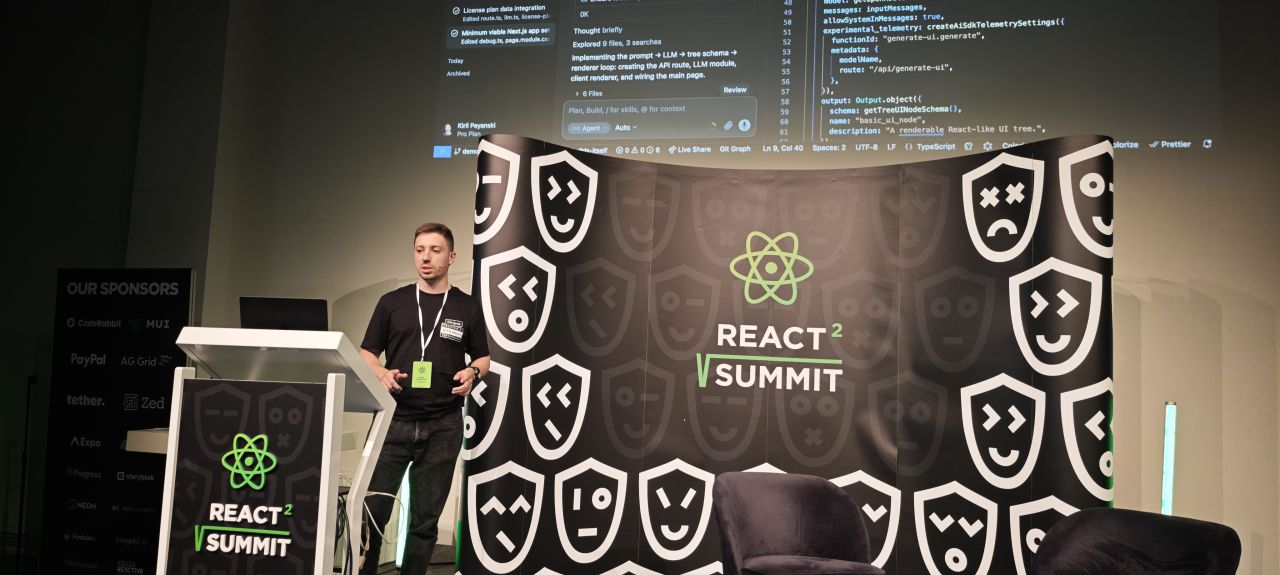
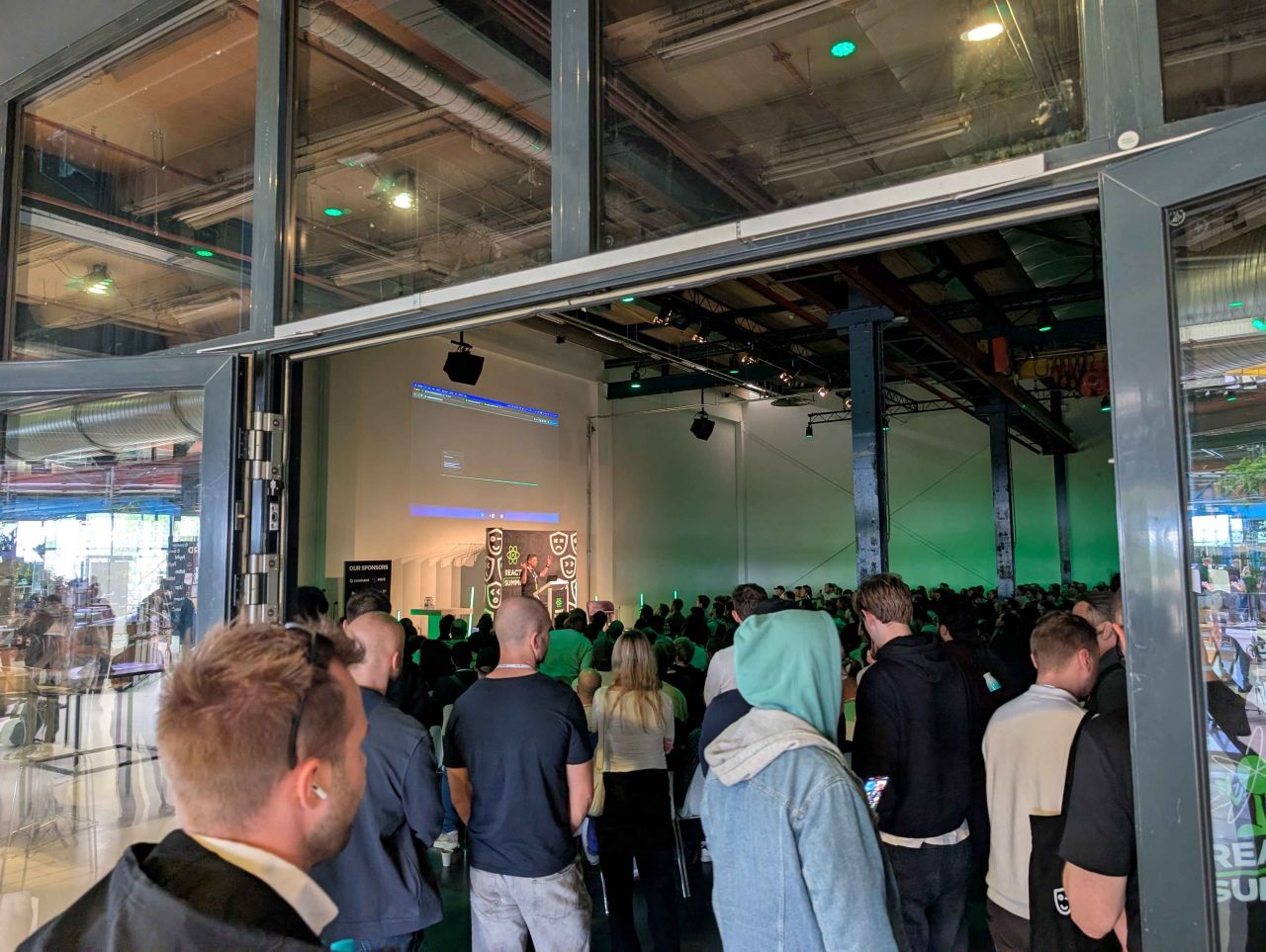
Our own Kiril Peyanski took the React Summit stage to deliver a talk on generative frontend, exploring a new paradigm where LLMs generate the logic that maps data to UI using React Server Components and Server Functions to make interfaces that adapt to the user. And when I tell you the room was packed, I mean literally standing room only and overflowing out the door!
As part of the conference, we also hosted a hackathon in partnership with GitNation, challenging attendees to build something that makes tech conferences better. We left the specifics up to our hackers. It could mean better for attendees, better for speakers, better for organizers or something else entirely. We wanted to see how creative folks would get, and the response blew us away. The hackathon lasted just 48 hours, and we had over 30 finished projects!
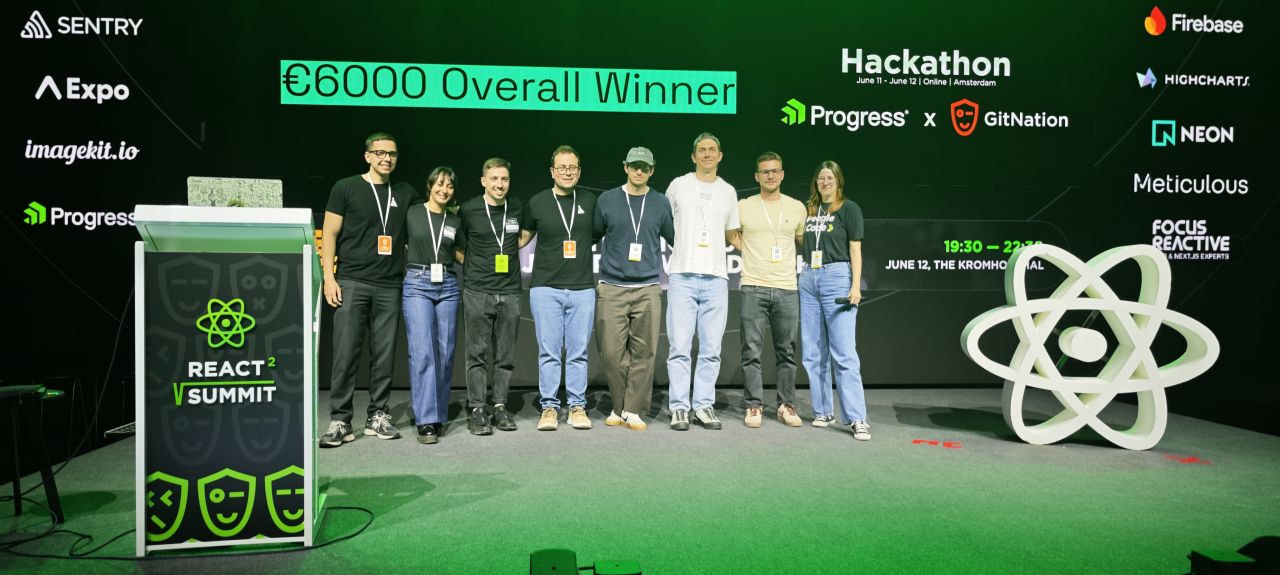
After judging (which, let me tell you, was a real challenge), three projects stood out from the crowd:
Our grand prize winners, HALLWAY: The team behind HALLWAY built a mobile-first app that turns the chaos of a conference day into a personalized, connected flow. Answer a few quick questions, and it builds your schedule, fills your free gaps with curated intros to the right people, and places you in a small group for the evening.
Our first runner-up, Conf Pilot: Conf Pilot is an MCP server that brings live conference schedules directly into AI chat. Ask "what’s next?" and instead of a wall of text, you get a fully interactive, themed widget with track filters, live countdown timers and calendar links—all without leaving your AI assistant. One of the first projects to use the new MCP Apps structured content pattern, and a seriously impressive build for a one-person submission!
Our second runner-up, Stuck Stack: Stuck Stack turns the conference into a live help marketplace. Post what you’re blocked on, find someone nearby who can help you in five minutes, and watch blockers move across a live board from Open → Matched → Solved. Organizers get a real-time dashboard that can even detect when enough attendees are stuck on the same thing and suggest a pop-up help clinic on the spot. Clever, useful and beautifully designed.
However, we couldn’t give prizes to everyone—as much as we wished we could! When I tell you the judging was a challenge, it’s because we had other submissions like these that were so, so impressive. While these unfortunately didn’t end up placing, we do want to make sure they get their time in the sun as well, so you can also appreciate their incredible work!
The Hallway took a new swing at the age-old problem of networking. Your AI agent walks into the conference before you do, negotiates with other attendees’ agents to find the right matches and only reveals identities once both humans consent.
Unison tackled something nobody else touched—language barriers. It dubs conference talks in real-time, letting speakers present in one language while every attendee hears it in their own, with no headsets and about a three-second lag. Two-way, too: attendees can ask questions in their language and the speaker receives them in theirs.
CrowdShift flipped the speaker experience on its head. Speakers normally prepare blind, with no idea who’s actually in the room. CrowdShift pulls registration data and builds a continuously updated audience brief, so a speaker can see that their crowd shifted from 65% senior to 55% junior and adapt their talk in real time.
ConferenceCast treated a multi-track conference like a TV broadcast: every room is a channel, and you get a personalized program guide with AI match scores, live session cards, countdown timers and a control-room dashboard for organizers to track what’s working in real time.
FireRaven Conference Hub went after a bigger problem: conference discovery is basically guesswork. Their platform gives speakers portable reputation profiles and lets attendees rate events across meaningful dimensions—expertise, clarity, practical impact and energy.
Nexo kept it focused: tell it your role, goals and interests, and it builds you a focused conference plan with a clear explanation for every recommendation. Sometimes, the best solutions are the simple ones.
Stage Deployer changes how you give talks. It lets speakers create small audience apps from a simple text prompt. Just type an idea, wait about two minutes, then share a QR code for the audience to scan. The interaction results appear live on the big screen as charts, rankings or word clouds.
We highly encourage you to check out all the submissions in the project gallery and see the incredible variety of things people built with Telerik and Kendo UI components from Progress Software.
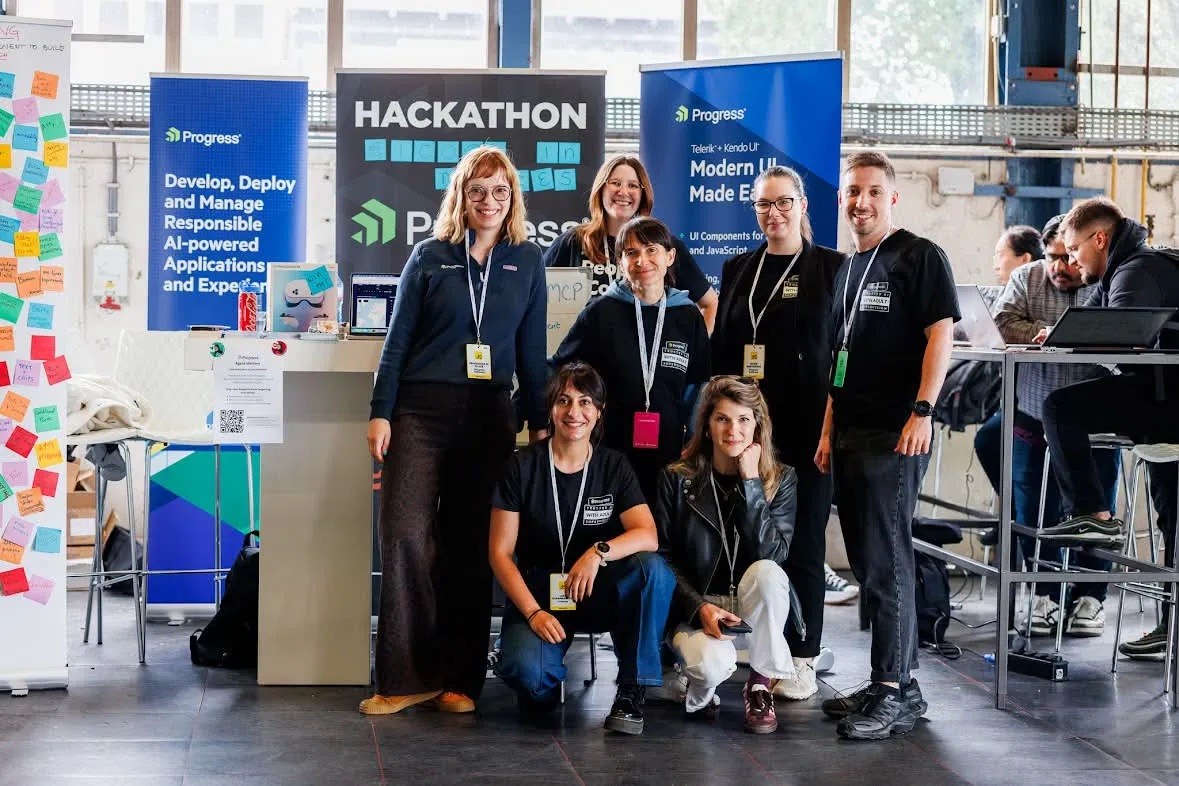
Amsterdam delivered on all fronts: the venue was great, the crowd was friendly and the whole experience reminded us just how great it is to be able to spend time together with a bunch of folks all excited to geek out about the same stuff.
Huge congrats to all three of our hackathon winning teams, and a massive well done to every single person who submitted. More than 30 projects in a couple of days is no joke! We had a fantastic time, and we’re already looking forward to the next one.
Ready to build your next React app?

Kathryn Grayson Nanz
Kathryn Grayson Nanz is a developer advocate at Progress with a passion for React, UI and design and sharing with the community. She started her career as a graphic designer and was told by her Creative Director to never let anyone find out she could code because she’d be stuck doing it forever. She ignored his warning and has never been happier. You can find her writing, blogging, streaming and tweeting about React, design, UI and more. You can find her at @kathryngrayson on Twitter.
Related Posts
Comments
All articles
Topics
Web MobileMobile
Desktop
Design
Productivity
People