or
1 answer
241 views
Hi Telerik team.
I have a question about the RadGridView. I use in my application multiple gridview which have in common a lot. I have made some class which inherit from GridViewTemplate to represent my buisness object. This let me use the same grid in multiple Template.
But I have tried to go to the next step in using these Template on a hierarchical Grid (by extending them to add one column for the relation with the parent grid). And then I came in trouble because the template on the main level should be a MasterGridViewTemplate (or inherit from it) and the secondary template should be a GridViewTemplate (or inherit from it BUT not from MasterGridViewTemplate).
Let see an example:
I have two business object with one hierarchical: Customer and order.
I create two class CustomerGridViewTemplate and OrderGridViewTemplate which inherits from MasterGridViewTemplate. I can use theses template to build grid which show a list of customer or a list of order.
Now, I want to build a hierarchical Grid which show customer and their relative order so I create a new class CustomerOrderGridViewTemplate which inherits from OrderGridViewTemplate (it just add a new column with client ID). I use the CustomerGridViewTemplate as MasterTemplate and I add the CustomerOrderGridViewTemplate in the template collection and create a relation. This doesn't work (only the master template display). If OrderGridViewTemplate inherits from GridViewTemplate instead of MasterGridViewTemplate the two grid display correctly but I can't use anymore OrderGridViewTemplate in other Grid as MasterTemplate.
I don't understand why a custom template inheriting from MasterGridViewTemplate couldn't be used as secondary template. Any help or explanation will be welcome.

Hristo
Telerik team

answered
on
23 Jul 2015
3 answers
118 views
Hi,
The RadMarkupEditor has some issues with the usage of custom tags. I will provide you 2 cases which will describe the problems.
Case 1:
- Start the editor and make sure no content is displayed in the Design nor in the Markup view.
- Switch to the Markup view.
- Type in the following (xHtml) text: <person>tom</person>
- Switch to Design view and notice the content "tom" is displayed (which is good).
- Switch back to the Markup view and notice that only the content "tom" is displayed (which is not good). The custom tag <person> is somehow disappeared.
Case 2:
- Start the editor and type some normal text in the Design view.
- Switch to the Markup view.
- Verify that the text you entered in step 1 is displayed.
- Append the same(xHtml) text from case 1 to the existing text from step 1.
- Switch to Design view and notice that the text from step 1 and the content "tom" are displayed (which is good).
- Switch back to the Markup view and notice that the content from step 4 is not correctly displayed anymore. You should see something like this: <person></person>tom
For me this is not normal behavior, especially not the second case. Can you have a look at this?
Thanks,
Tom

Dimitar
Telerik team
answered
on
23 Jul 2015
3 answers
959 views
Hello Team ,
I have a gridview in my winforms program, where i need to display 2 headers for the grid like in below example
gridview should have column name as one header and the corresponding unit of measurement as second header
if i add unit of measurement as first row to grid, not working because
i am binding data to the grid from an excel using import option, that time it is removing the added row and binding the data to it
is this possible in telerik, if so please help me
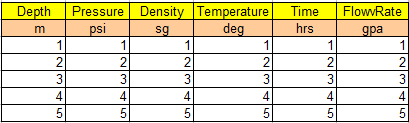
I have a gridview in my winforms program, where i need to display 2 headers for the grid like in below example
gridview should have column name as one header and the corresponding unit of measurement as second header
if i add unit of measurement as first row to grid, not working because
i am binding data to the grid from an excel using import option, that time it is removing the added row and binding the data to it
is this possible in telerik, if so please help me

Dess | Tech Support Engineer, Principal
Telerik team
answered
on
23 Jul 2015
12 answers
387 views
I have a gridview on a winform and the datasource is a datatable, after I sort though the underlying datatable does not update and this makes other operations wrong. using the underlying datatable values and the row number for it instead of the visible data in the grid.
any assistance appreciated as this is a very late discovery.
I just want to add I am using the q3 2010 set grid control. I do not really have any extra sorting settings, other than allow sort true. My expectation when I hit the column header is that it will do a switches between asc and desc as default.
any assistance appreciated as this is a very late discovery.
I just want to add I am using the q3 2010 set grid control. I do not really have any extra sorting settings, other than allow sort true. My expectation when I hit the column header is that it will do a switches between asc and desc as default.
Hristo
Telerik team
answered
on
22 Jul 2015
1 answer
113 views
I'm on the newest version of the telerik winforms. (2015_2_623)
After updating, the first occurrence of recurring appointments no longer show up.
This appears to occur when using any time zone that comes before UTC time.(Any "-" time)
Is there a fix for this issue?
Dess | Tech Support Engineer, Principal
Telerik team
answered
on
22 Jul 2015
6 answers
336 views
Hi,
May I know is there any plan for Telerik to include Logging support in various controls? So that developers don't need to write their own log framework or use any other third party logging tools.
Everything has to be built-in to deploy an integrated solution solely using Telerik Controls :-)
Thank you.
Regards,
Jenson
May I know is there any plan for Telerik to include Logging support in various controls? So that developers don't need to write their own log framework or use any other third party logging tools.
Everything has to be built-in to deploy an integrated solution solely using Telerik Controls :-)
Thank you.
Regards,
Jenson

Stefan
Telerik team
answered
on
22 Jul 2015
1 answer
137 views
I have table with custom field based on GridDataCellElement.
Now in this field RadLabelElement and two RadButtonElement shown. All OK.
But when I am try to add RadCheckBoxElement - all field will shown empty.
How can I fix it?
Now in this field RadLabelElement and two RadButtonElement shown. All OK.
But when I am try to add RadCheckBoxElement - all field will shown empty.
protected override void CreateChildElements(){ // ... init elements this.Children.Add(radLabel); // ok this.Children.Add(radbtnColor); // ok this.Children.Add(radbtnFont); // ok this.Children.Add(new RadCheckBoxElement()); // GridDataCellElement will shown empty if this line not removed}How can I fix it?
Dimitar
Telerik team
answered
on
21 Jul 2015
1 answer
171 views
Hi,
I used this solution to increase my DropDownList popup when item text is longer than DropDownList size. But when I open the DropDownList for the first time, it goes off the screen (my DropDownList is at the right edge of the form and popup isn't positioned correctly and goes right off the screen).
Then when I close and open DropDownList, the popup position will be correct and after that everything is OK.
Should I add something at the end of "PopupOpened" event after resizing items?
Dimitar
Telerik team
answered
on
21 Jul 2015
2 answers
239 views
After placing more elements in the layout than I realized I needed, I tried to delete the extra elements but all I can do apparently is to 'Hide' the extra elements.
Is there a way to delete the extra elements rather than 'Hide' them?
Hristo
Telerik team
answered
on
21 Jul 2015
3 answers
244 views
Hi to all,
I need to show a WaitingBar during mapping my appointments. How can I do this?
Actually I have a custom control with this structure: a Panel that contains sequentially RadNavigator (Dock.Top) > RadScheduler (Dock.Fill) > RadWaiting (Dock.Bottom)
I can't set a DataSource directly to the database, I used a BindingList<CustomAppointment>
During intercept some event's scheduler and navigator, fire a my delegate event NeedData that asks to Windows program to execute load data for specific period.
In this case if items of my BindingList<CustomAppointment> contains a lot of items, the primary thread is freezing.
I would use a RadWaitingBar to show a "waiting period" to user.
How can I do this? Normally I resolve this problem.... but on WPF Application with RadBusyIndicator :-)
01.#region navigator events02.void NavigatorNavigateForwardsClick(object sender, EventArgs e)03.{04. if (NeedData != null)05. NeedData(scheduler.ActiveView.StartDate, scheduler.ActiveView.EndDate);06.}void NavigatorNavigateBackwardsClick(object sender, EventArgs e)07.{08. if (NeedData != null)09. NeedData(scheduler.ActiveView.StartDate, scheduler.ActiveView.EndDate);10.}#endregion#region scheduler eventsvoid SchedulerActiveViewChanged(object sender, SchedulerViewChangedEventArgs e)11.{12. if (NeedData != null)13. NeedData(scheduler.ActiveView.StartDate, scheduler.ActiveView.EndDate);14.}
01.// create and configure a scheduler binding source02.schedulerBindingDatasource = new SchedulerBindingDataSource();03.// map the MyAppointment properties to the scheduler04.appointmentMappingInfo = new AppointmentMappingInfo();05.appointmentMappingInfo.Start = "Start";06.appointmentMappingInfo.End = "End";07.appointmentMappingInfo.Summary = "Subject";08.appointmentMappingInfo.Description = "Description";09.appointmentMappingInfo.Location = "Location";10.appointmentMappingInfo.UniqueId = "Id";11.appointmentMappingInfo.Exceptions = "Exceptions";12.appointmentMappingInfo.ResourceId = "ResourceId";13.appointmentMappingInfo.StatusId = "StatusId";14.appointmentMappingInfo.BackgroundId = "BackgroundId";15. 16.schedulerBindingDatasource.EventProvider.Mapping = appointmentMappingInfo;17.// assign the generic List of CustomAppointment as the EventProvider data source18.schedulerBindingDatasource.EventProvider.DataSource = customAppointments;19. 20.if (customResources != null)21. LoadCustomResources();22. 23.scheduler.DataSource = schedulerBindingDatasource;
Dario
Top achievements
 Rank 2
Rank 2
answered
on
18 Jul 2015