# Getting Started with the MultiColumnComboBox
This tutorial explains how to set up a basic Telerik UI for ASP.NET MVC MultiColumnComboBox and highlights the major steps in the configuration of the component.
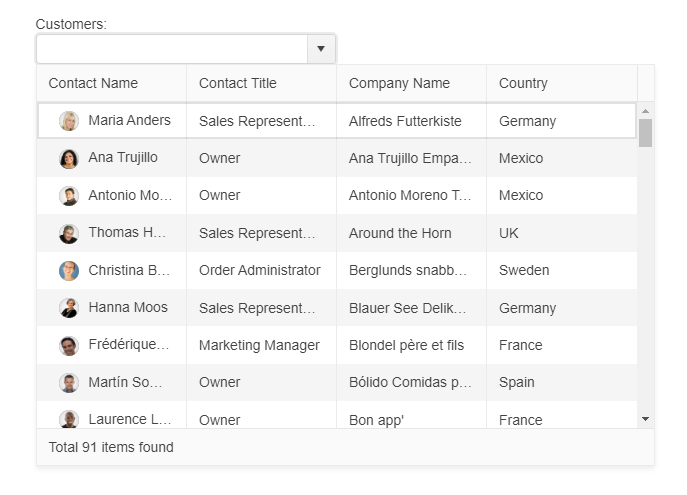
You will initialize a MultiColumnComboBox control with a number of tools. Next, you will handle some of the MultiColumnComboBox events.
## Prerequisites
To successfully complete the tutorial, you need a project that is already configured to use the Telerik UI for ASP.NET MVC components:
* To create a new pre-configured project for the Telerik UI for ASP.NET MVC components, you can [use a project template](https://www.telerik.com/aspnet-mvc/documentation/getting-started-mvc/first-steps).
* To manually configure an existing project by using NuGet, see the [Adding Telerik UI through NuGet](https://www.telerik.com/aspnet-mvc/documentation/getting-started/setup-with-nuget).
## 1. Prepare the CSHTML File
The first step is to add the required directives at the top of the `.cshtml` document:
* To use the Telerik UI for ASP.NET MVC HtmlHelpers:
```cshtml
@using Kendo.Mvc.UI
```
Optionally, you can structure the document by adding the desired HTML elements like headings, divs, paragraphs, and apply some basic styles.
## 2. Initialize the MultiColumnComboBox
Use the MultiColumnComboBox HtmlHelper to add the component to a page:
* The `Name()` configuration method is mandatory as its value is used for the `id` and the `name` attributes of the MultiColumnComboBox element.
* The `DataTextField()` configuration method provides the text content of the list items. The component will filter the data source based on this field.
* The `DataValueField()` configuration method provides the value of the component.
* The [`DataSource`](https://docs.telerik.com/aspnet-core/api/kendo.mvc.ui.fluent/multicolumncomboboxbuilder#datasourcesystemaction) of the component which is used to display a list of values. Can be a JavaScript object which represents a valid data source configuration, a JavaScript array or an existing kendo.data.DataSource instance.
* The `Columns` configuration array defines the columns rendered in the table of the MultiColumnComboBox.
```Razor HtmlHelper
@using Kendo.Mvc.UI
@(Html.Kendo().MultiColumnComboBox()
.Name("customers")
.DataTextField("ContactName")
.DataValueField("CustomerID")
.Columns(columns =>
{
columns.Add().Field("ContactName").Title("Contact Name").Template("#: ContactName #").Width("150px");
columns.Add().Field("ContactTitle").Title("Contact Title").Width("150px");
columns.Add().Field("CompanyName").Title("Company Name").Width("150px");
columns.Add().Field("Country").Title("Country").Width("150px");
})
.FooterTemplate("Total #: instance.dataSource.total() # items found")
.HtmlAttributes(new { style = "width:100%;" })
.DataSource(source => source
.Custom()
.Transport(transport => transport
.Read(read =>
{
read.Action("BasicUsage_Customers_Read", "MultiColumnComboBox");
}))
)
)
```
## 3. Handle the MultiColumnComboBox Events
The MultiColumnComboBox [exposes various events](https://www.telerik.com/aspnet-mvc/documentation/api/kendo.mvc.ui.fluent/multicolumncomboboxeventbuilder) that you can handle and further customize the functionality of the component. In this tutorial, you will use the `Open`, `Close`, and `Select` events of the MultiColumnComboBox.
```Razor HtmlHelper
@using Kendo.Mvc.UI
@(Html.Kendo().MultiColumnComboBox()
.Name("customers")
.DataTextField("ContactName")
.DataValueField("CustomerID")
.Columns(columns =>
{
columns.Add().Field("ContactName").Title("Contact Name").Template("#: ContactName #").Width("150px");
columns.Add().Field("ContactTitle").Title("Contact Title").Width("150px");
columns.Add().Field("CompanyName").Title("Company Name").Width("150px");
columns.Add().Field("Country").Title("Country").Width("150px");
})
.FooterTemplate("Total #: instance.dataSource.total() # items found")
.HtmlAttributes(new { style = "width:100%;" })
.DataSource(source => source
.Custom()
.Transport(transport => transport
.Read(read =>
{
read.Action("BasicUsage_Customers_Read", "MultiColumnComboBox");
}))
)
.Events(e =>
{
e.Select("onSelect").Open("onOpen").Close("onClose");
})
)
```
For more examples, refer to the [demo on using the events of the MultiColumnComboBox](https://demos.telerik.com/aspnet-mvc/multicolumncombobox/events).
## 4. (Optional) Reference Existing MultiColumnComboBox Instances
To use the [client-side API of the MultiColumnComboBox](https://docs.telerik.com/kendo-ui/api/ui/multicolumncombobox) and build on top of its initial configuration, you need a reference to the MultiColumnComboBox instance. Once you get a valid reference, you can call the respective API methods:
1. Use the `.Name()` (`id` attribute) of the component instance to get a reference.
```JS script
```
2. Use the [client-side API of the MultiColumnComboBox](https://docs.telerik.com/kendo-ui/api/ui/multicolumncombobox) to control the behavior of the widget. In this example, you will use the [`enable`](https://docs.telerik.com/kendo-ui/api/ui/multicolumncombobox/methods/enable) method to disable the MultiColumnComboBox.
```JS script
```
For more information on referencing specific helper instances, see the [Methods and Events](https://www.telerik.com/aspnet-mvc/documentation/html-helpers/helper-basics/events-and-methods) article.
## Next Steps
* [Using a Cascading MultiColumnComboBox](https://www.telerik.com/aspnet-mvc/documentation/html-helpers/editors/multicolumncombobox/cascading)
* [Changing the Appearance of the MultiColumnComboBox](https://www.telerik.com/aspnet-mvc/documentation/html-helpers/editors/multicolumncombobox/appearance)
* [Configuring the Columns of the MultiColumnComboBox](https://www.telerik.com/aspnet-mvc/documentation/html-helpers/editors/multicolumncombobox/columns)
## See Also
* [Using the API of the MultiColumnComboBox for ASP.NET MVC (Demo)](https://demos.telerik.com/aspnet-mvc/multicolumncombobox/api)
* [Client-Side API of the MultiColumnComboBox](https://docs.telerik.com/kendo-ui/api/ui/multicolumncombobox)
* [Server-Side API of the MultiColumnComboBox](https://www.telerik.com/aspnet-mvc/documentation/api/multicolumncombobox)
* [Knowledge Base Section](https://www.telerik.com/aspnet-mvc/documentation/knowledge-base)